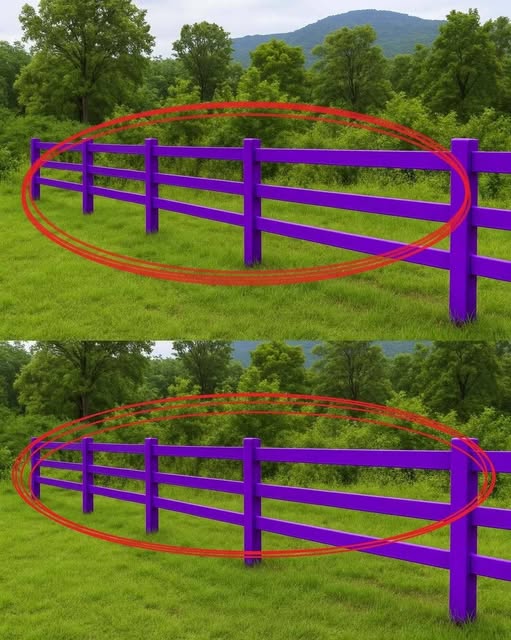
Purple paint laws typically refer to vertical stripes or marks placed at certain intervals on trees or posts.
They do not usually involve painting an entire fence solid purple.
That’s a big difference.
If your neighbor painted the entire shared fence bright lavender from top to bottom, that may not be about legal boundary marking at all. It could simply be a personal aesthetic decision — or a misunderstanding of what the law actually requires.
What If It’s a Shared Fence?
Here’s where things get more complicated.
A shared fence (sometimes called a boundary fence) is often considered jointly owned. In many areas, both property owners have equal rights and responsibilities regarding maintenance and modifications.
That usually means one party cannot:
-
Change the structure significantly
-
Replace it without agreement
-
Paint it a drastically different color without consent
Local property laws vary, so checking your municipal guidelines or HOA rules (if applicable) is a smart next step.
Even if purple paint is allowed for marking property lines in your state, that doesn’t automatically give someone the right to alter a shared structure without discussion.
Could It Be Symbolic Instead?
Outside of legal property markings, purple can symbolize different things depending on context:
-
Creativity and individuality
-
Royalty or luxury
-
Spiritual awareness
-
Support for certain causes
In neighborhoods without Purple Paint Laws, a purple fence may simply reflect someone’s taste.
And sometimes, the explanation is much simpler than we imagine.
Why People Get So Emotional About Fence Disputes
Fences represent more than wood and paint. They symbolize:
-
Privacy
-
Security
-
Boundaries
-
Respect
When a neighbor makes a change without discussion, it can feel like a violation of trust rather than just an aesthetic disagreement.
That’s likely why you felt so upset you couldn’t even ask what it meant. It wasn’t just about the color — it was about not being consulted.
And that reaction is completely understandable.
What You Can Do Next
Before escalating the situation, consider these calm and practical steps:
-
Check your local laws. Confirm whether purple paint has legal meaning where you live.
-
Review property records. Determine whether the fence is legally shared.
-
Have a direct conversation. Ask what motivated the decision.
-
Propose a compromise. For example, keeping your side neutral while allowing color on theirs.
Often, fence disputes can be resolved through communication before they become legal matters.
A Quick Reality Check
If you live in an urban or suburban neighborhood, and your neighbor painted the entire fence purple, it’s unlikely to be a strict legal boundary marking. Most Purple Paint Laws involve very specific marking methods — not full decorative paint jobs.
But if you’re in a rural area, especially in one of the states mentioned earlier, there’s a real chance your neighbor was referencing the no-trespassing law.
Context matters.
Final Thoughts