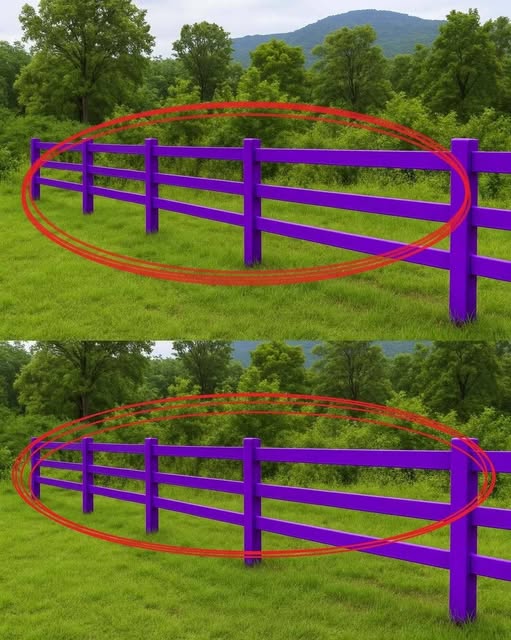
Imagine walking into your backyard one afternoon and noticing something completely unexpected: your shared fence is suddenly painted bright purple. No warning. No discussion. Just… purple.
It’s bold. It’s unusual. And if you didn’t agree to it, it can feel incredibly frustrating.
But here’s the twist — in some places, a purple fence isn’t just a color choice. It actually carries a specific meaning.
If your neighbor confidently said, “Everyone paints them purple for a reason,” there might be more behind that statement than you think.
Let’s explore what a purple fence can really mean — and whether you should be concerned.
The “Purple Paint Law” in Certain U.S. States
In several states across the United States, purple paint on trees or fence posts isn’t decorative at all — it’s a legal no-trespassing warning.
Instead of putting up a “No Trespassing” sign that can fall down, fade, or be removed, property owners can mark boundaries using vertical purple paint marks. This practice is sometimes called the “Purple Paint Law.”
States where this is recognized include:
-
Texas
-
Arkansas
-
Missouri
-
North Carolina
-
Tennessee
-
Illinois
-
Indiana
And there are others.
In these states, a clearly visible purple paint mark on boundary trees or fence lines legally signals:
“Do not enter this property.”
So if you live in one of these areas, your neighbor may have been trying to mark the property boundary rather than simply choosing a trendy color.
Why Purple?
You might wonder — why not red or orange?
There are practical reasons behind choosing purple:
-
It stands out clearly in natural environments.
-
It’s less commonly used for other purposes, so it’s distinctive.
-
It remains visible in different seasons.
-
It’s harder to confuse with natural markings.
The idea originated decades ago in rural communities where signs were frequently stolen or damaged. Paint markings offered a durable, low-maintenance solution.
However, there’s an important detail most people overlook.
It’s Usually Specific Marks — Not the Entire Fence