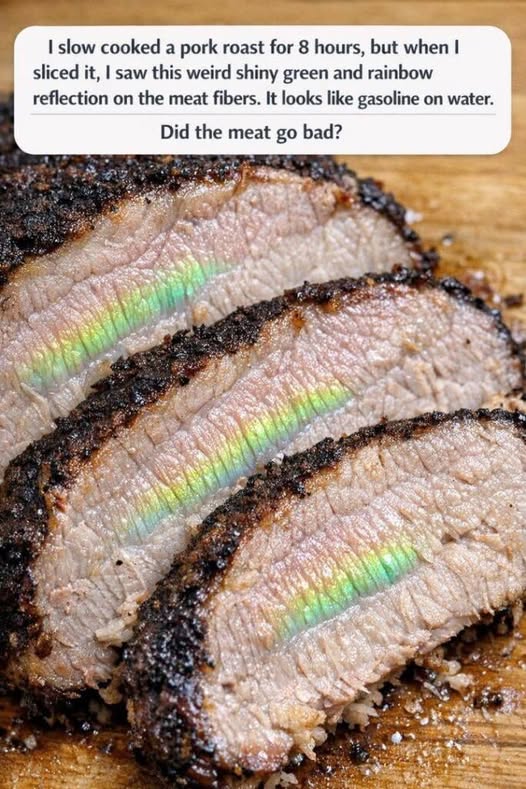
In the vast majority of cases: Yes.
Iridescent pork is typically safe as long as:
-
It smells normal
-
It was stored properly
-
It was cooked to a safe internal temperature
-
There’s no slimy texture
Spoiled meat usually gives clear warning signs:
-
Sour or rotten odor
-
Sticky or slimy feel
-
Grayish or green patches that look dull, not shiny
-
Gas bubbles or unusual softness
The rainbow sheen, on the other hand, is shiny and reflective — almost like a mirror.
That’s a big difference.
Why Does It Happen More in Slow-Cooked Meat?
Slow cooking can actually make iridescence more noticeable.
Long, gentle heat breaks down connective tissue and makes muscle fibers softer and more uniform. When you slice through that tender structure, the smooth surface reflects light more evenly — increasing the rainbow effect.
It’s especially visible when:
-
The meat is sliced thin
-
A sharp knife creates a smooth cut
-
Bright light hits the surface at an angle
So ironically, your well-cooked roast may be showing off its texture in a way that just looks a little alarming.
The Role of Nitrites (If Any)
Sometimes people associate greenish hues in meat with curing agents like nitrites, commonly used in bacon or ham. While nitrites can affect color, they are not typically responsible for the rainbow sheen in fresh pork roasts.
The shimmering effect is more about physics than chemistry.
When Should You Actually Worry?
While iridescence itself is harmless, you should trust your senses overall.
Do not eat the meat if you notice:
-
A strong, sour smell
-
Visible mold
-
A slimy coating
-
A taste that seems “off”
Food safety always comes first.
But if the only unusual thing is that reflective rainbow sheen — especially right where the knife sliced — it’s almost certainly safe.
Why the Color Is Often Green