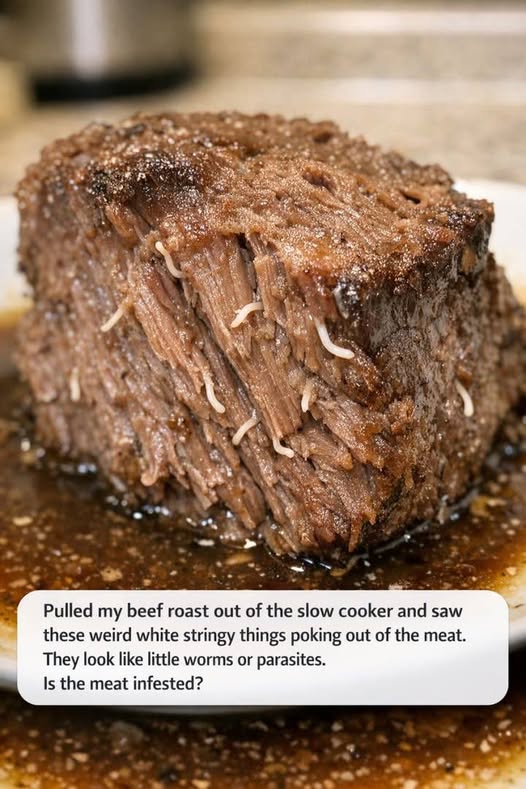
Slow cookers are designed to break down tough cuts over several hours. This cooking method:
-
Softens muscle fibers
-
Converts collagen into gelatin
-
Separates the meat into strands
As everything relaxes and loosens, internal structures become more visible.
If you roasted the same cut quickly at high heat, you likely wouldn’t notice those strands as clearly — because the meat wouldn’t separate as much.
In fact, seeing tender, shreddable fibers is often a sign you cooked it correctly.
🧬 Could It Be Parasites?
This is the fear that most people jump to.
The good news: in properly sourced and thoroughly cooked beef, parasites are extremely rare.
Modern food safety systems include:
-
Regulated processing
-
Inspection standards
-
Temperature controls
-
Safe handling guidelines
Additionally, parasites do not survive long, slow cooking at safe internal temperatures.
If your roast:
-
Reached safe cooking temperature
-
Smelled normal before cooking
-
Came from a reputable source
It is overwhelmingly likely that what you’re seeing is harmless connective tissue.
Parasites in beef, when present, typically appear very differently and would not look like sturdy, fibrous strands attached firmly to muscle.
👀 How to Tell the Difference
Normal connective tissue:
✔ Attached firmly to the meat
✔ Tough and fibrous
✔ Slightly translucent or white
✔ Does not move
✔ Tears like a tendon
Something concerning would look very different — often cyst-like or embedded unusually inside raw meat, not simply stringy after cooking.
If the strands stretch and tear like a tough thread, that’s classic connective tissue behavior.
🍽 Why This Happens More with Certain Cuts