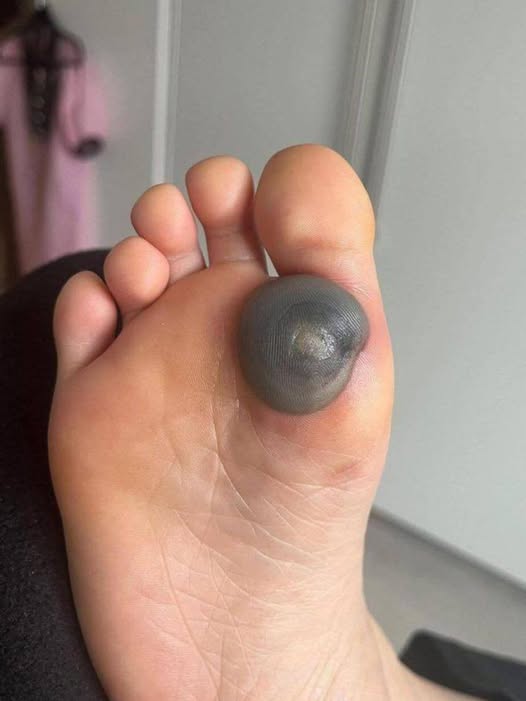
This part is very important.
Do not:
-
Pop it
-
Cut it open
-
Drain it at home
-
Apply heat
-
Use sharp objects
Even though it might look like a blister that needs draining, opening it yourself increases the risk of infection significantly.
The skin acts as a natural protective barrier. Once broken, bacteria can enter easily — especially on the bottom of the foot.
What You Can Do at Home
If the swelling looks stable and there are no warning signs, supportive care can help:
✔ Keep the foot elevated
✔ Limit walking or pressure
✔ Use a cool compress wrapped in cloth
✔ Ensure footwear is soft and loose
✔ Monitor the size and color
Most uncomplicated blood blisters gradually reabsorb over several days to weeks.
The dark color may change from deep purple to brownish as it heals. That’s normal.
How Doctors Treat It
If you visit a healthcare professional, they may:
-
Examine for deeper injury
-
Check circulation and nerve response
-
Use imaging if trauma is suspected
-
In some cases, carefully drain it under sterile conditions
Medical drainage is different from doing it at home. It’s performed with proper tools and sterile technique to reduce infection risk.
In rare cases where infection is present, antibiotics may be prescribed.
The Emotional Side of It