As we age, our bodies naturally begin to change.
Muscles that once felt strong may gradually weaken. Balance may not feel as steady. Climbing stairs can become more challenging. While these shifts are normal, there’s one important factor many people overlook — proper protein intake.
After the age of 60, maintaining muscle mass becomes more important than ever. Without enough high-quality protein in your diet, your legs can gradually lose strength, and muscles may begin to shrink — a process known as age-related muscle loss.
Let’s talk about why this happens and what you can do about it.
💪 Understanding Muscle Loss After 60
As we grow older, the body becomes less efficient at building and maintaining muscle tissue. This condition, often referred to as age-related muscle decline, can affect:
-
Strength
-
Balance
-
Mobility
-
Overall independence
Muscle tissue doesn’t just help you move — it also supports metabolism, bone health, and joint stability.
When protein intake is too low, the body may begin breaking down muscle faster than it rebuilds it. Over time, this can result in weaker legs and reduced endurance.
🍲 Why Protein Becomes More Important With Age
Protein is made up of amino acids — the building blocks your body uses to repair and maintain muscle tissue.
After 60:
-
Muscle repair slows down
-
Appetite may decrease
-
Nutrient absorption can change
-
Physical activity levels sometimes drop
This combination makes adequate protein intake even more essential.
Lean meats, poultry, fish, eggs, dairy products, legumes, and plant-based protein sources all contribute to maintaining muscle health.
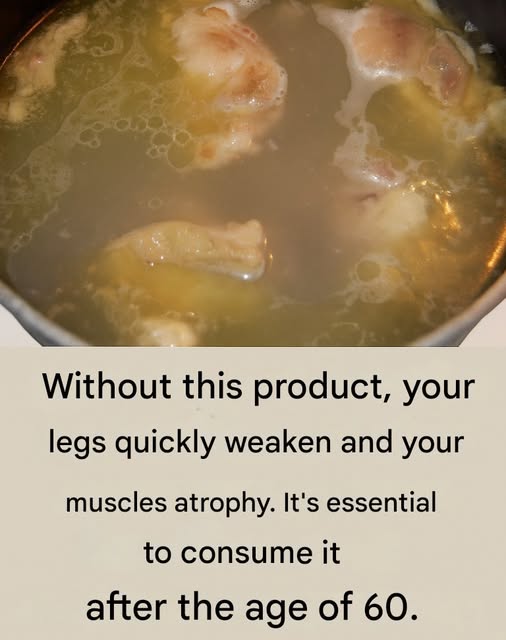
Bone broth and slow-cooked meats, like those shown in the image, are often valued because they contain protein along with additional nutrients that support joints and connective tissues.
🦵 Why Legs Are Affected First