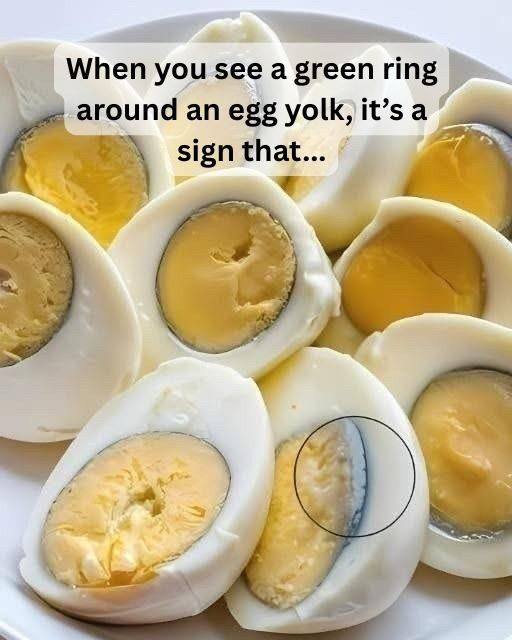
Have you ever peeled a hard-boiled egg, only to notice an unappetizing green or gray ring forming around the yolk? Don’t worry — it’s more common than you think, and it doesn’t mean your eggs are unsafe to eat. In fact, it’s a harmless chemical reaction that happens under certain cooking conditions.
Understanding why this happens can help you make perfectly cooked eggs every time, whether for salads, deviled eggs, or a simple breakfast.
🔬 The Science Behind the Green Ring
The green or gray ring forms because of a reaction between iron in the egg yolk and sulfur in the egg white. Here’s what happens step by step:
-
Cooking the Egg – When you boil eggs, the heat causes the proteins in both the white and yolk to denature (change structure) and solidify.
-
Chemical Reaction – Sulfur naturally present in the egg white reacts with iron in the yolk.
-
Green Ring Formation – This reaction produces ferrous sulfide (FeS), which appears as a greenish-gray ring around the yolk.
The reaction is more pronounced when eggs are cooked for too long or at very high temperatures.
⏱ How to Prevent the Green Ring
While the green ring is harmless, most people prefer their eggs without it. Here are some tips to prevent it:
1. Don’t Overcook
Boil eggs for 9–12 minutes, depending on size. Overcooking increases the sulfur-iron reaction and makes the green ring more likely.
2. Cool Quickly
After boiling, immediately transfer eggs to an ice bath or run under cold water. Rapid cooling stops the cooking process and minimizes the chemical reaction.
3. Use Fresh Eggs
Older eggs are slightly more alkaline, which can intensify the green ring. Using fresher eggs helps reduce it.
4. Adjust Cooking Method
-
Steam eggs instead of boiling: gentle heat reduces the chance of green rings.
-
Bake eggs in the oven at lower temperatures for even cooking.
✅ Is It Safe to Eat?