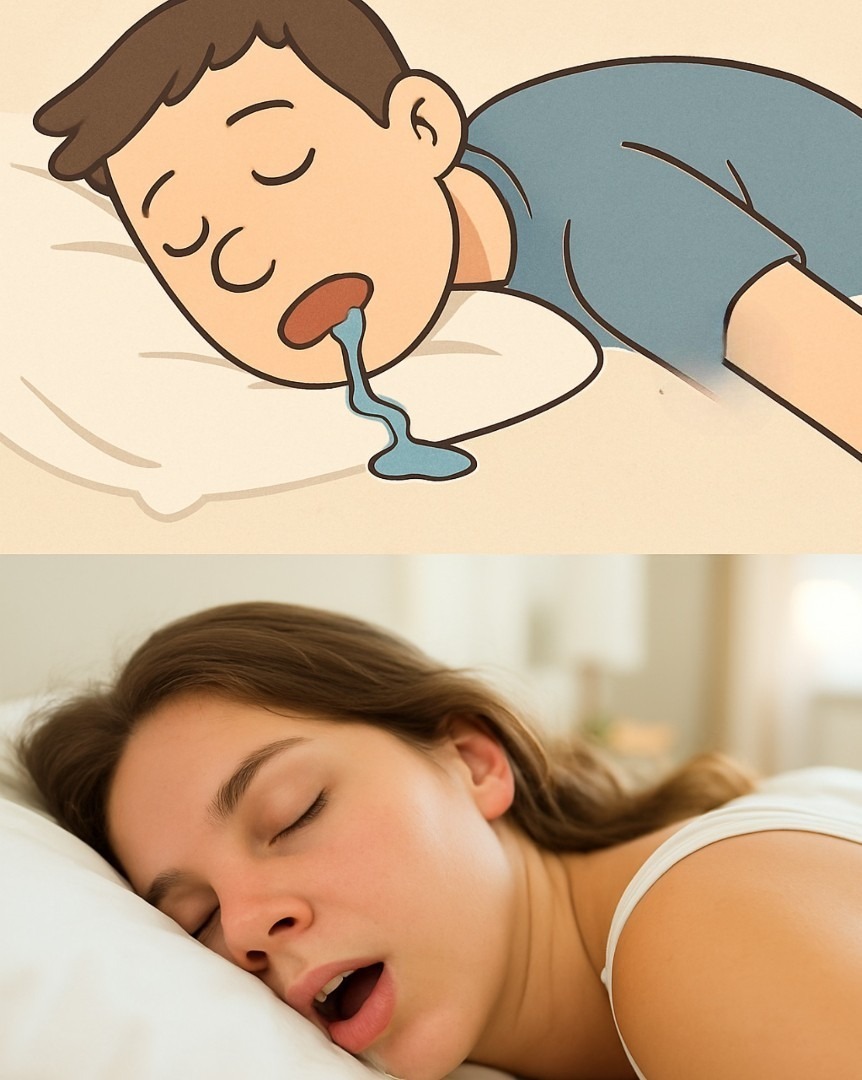
Occasional drooling is normal. However, you may want to consult a healthcare professional if drooling is accompanied by:
-
Difficulty swallowing
-
Sudden facial weakness
-
Slurred speech
-
Frequent choking sensations
-
Symptoms of sleep apnea (loud snoring, gasping for air)
These could signal an underlying medical condition that needs attention.
🌙 Is Drooling Linked to Brain Health?
There’s a popular belief online that drooling means your brain is “well rested” or “high functioning.” While deep sleep is healthy, drooling itself is not a direct measure of intelligence or brain power.
It’s simply a result of muscle relaxation and saliva production during sleep.
That said, reaching deep sleep regularly is important for cognitive function, mood stability, and long-term brain health.
💡 How to Reduce Nighttime Drooling
If it bothers you, try:
-
Sleeping on your back
-
Using an extra pillow to slightly elevate your head
-
Treating nasal congestion
-
Maintaining good oral hygiene
-
Staying hydrated
Most of the time, simple adjustments make a noticeable difference.
💤 Final Thoughts