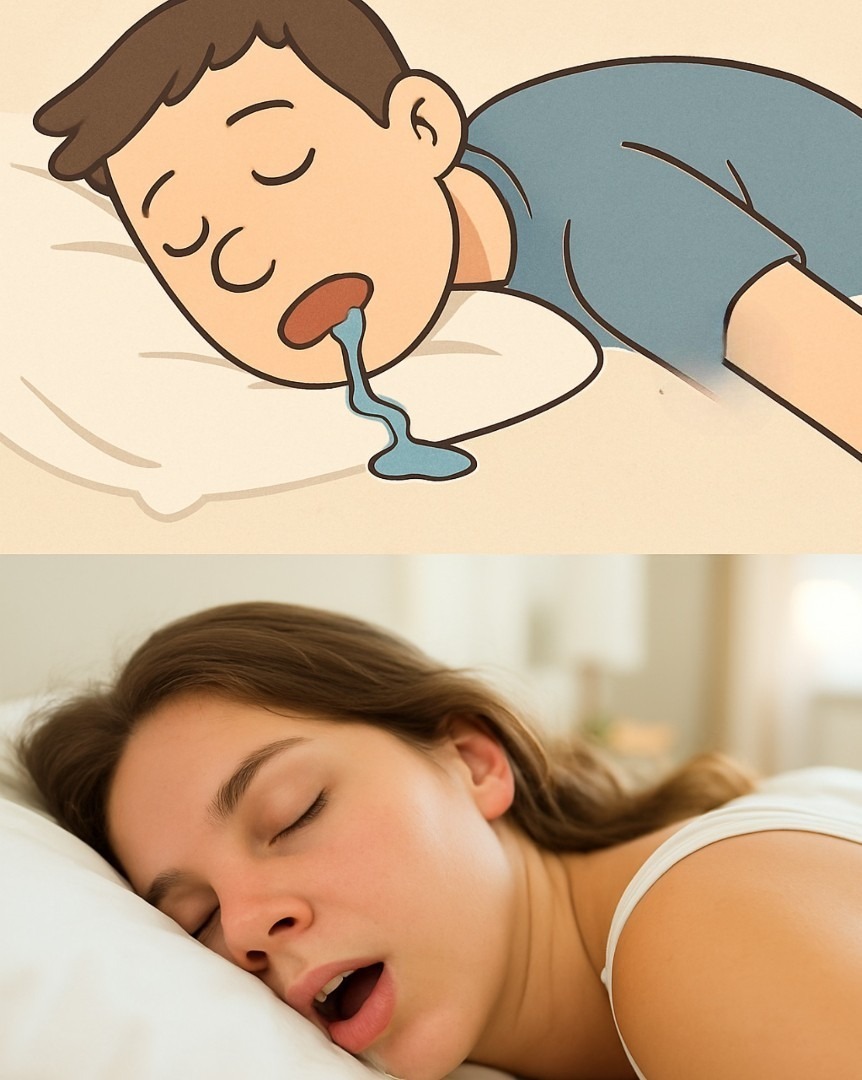
Side and stomach sleepers are more likely to drool than back sleepers.
Why? Gravity.
When you sleep on your side:
-
Saliva naturally pools toward the lower side of your mouth
-
Relaxed facial muscles allow it to escape
Back sleepers are less likely to drool because saliva tends to stay in the mouth and be swallowed.
👃 3. Nasal Congestion Can Contribute
If your nose is blocked due to:
-
Allergies
-
A cold
-
Sinus congestion
You may breathe through your mouth during sleep. Mouth breathing increases the likelihood of drooling.
Improving airflow with humidifiers or allergy management can reduce this issue.
😬 4. Bite Alignment and Jaw Position
Your jaw structure and bite alignment can also influence whether your mouth stays open during sleep.
If your lips don’t close comfortably or your jaw relaxes too much at night, drooling becomes more likely.
In some cases, a dentist can provide guidance if drooling is frequent and bothersome.
⚠️ When Should You Be Concerned?