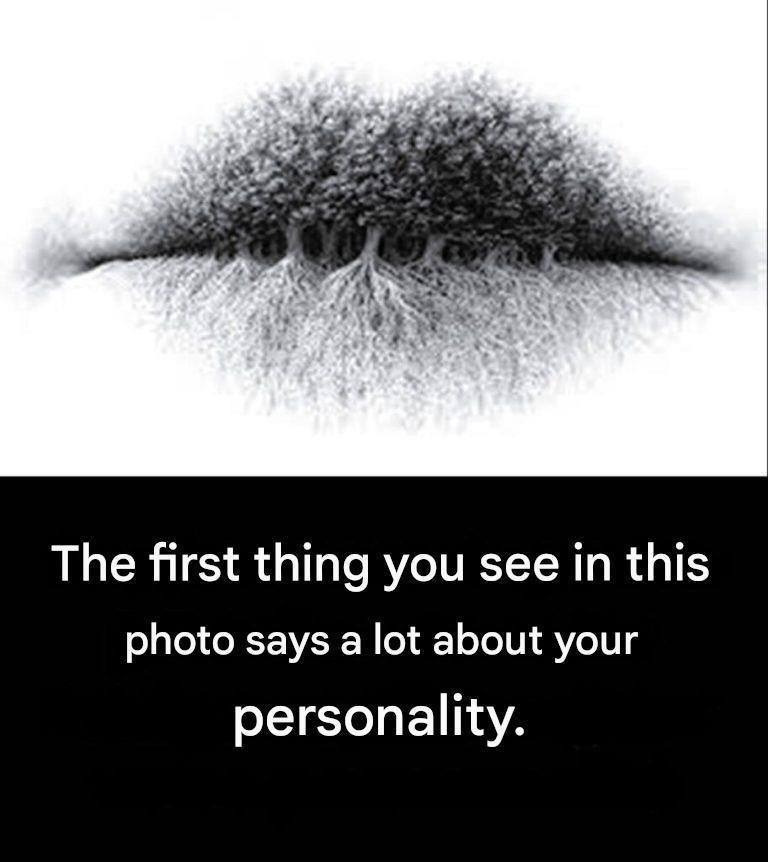
The reason optical illusions work so well lies in how our brains interpret visual signals. When we look at an image, our eyes collect light and shapes, but it’s the brain that decides what those shapes represent.
Our perception is influenced by:
-
Past experiences
-
Personality traits
-
Emotional state
-
Expectations
-
Cultural background
For example, if you frequently engage with faces in your daily life, your brain may be more likely to recognize facial shapes quickly. If you often work with nature imagery or patterns, you might identify the trees first.
This phenomenon is known as “figure-ground perception,” where the brain chooses which part of an image is the main object (figure) and which part is background (ground). Once your brain locks into one interpretation, it can be hard to unsee it.
The Science Behind First Impressions
Studies in visual cognition show that our brains process images in milliseconds. The first thing you notice is often guided by automatic pattern recognition systems that operate below conscious awareness.
However, it’s important to understand that these viral “what you see first” personality interpretations are not scientifically diagnostic tools. They’re engaging ways to explore perception and cognitive style—but they don’t define your character or predict your future.
Think of them as conversation starters rather than personality tests.
What This Says About Perception in Everyday Life